








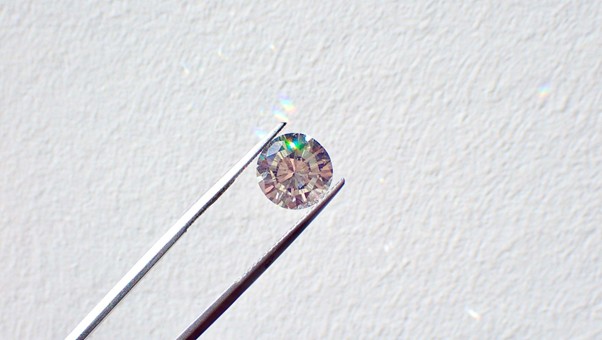
The brilliance of a diamond has captivated hearts for centuries. But did you know that not all diamonds emerge from the depths of the Earth? HPHT, or High-Pressure High-Temperature diamonds, have revolutionised the world of jewellery by offering a sustainable and affordable alternative without compromising on quality.
From their inception to their dazzling presence in engagement rings, this article unveils the meticulous process behind HPHT diamonds, their types, and how they compare to other diamonds, particularly natural and CVD diamonds.
Get ready to be inspired as we take a closer look at these unique creations.
Read summary
How are HPHT diamonds made, and are they real diamonds?
HPHT (High-Pressure High-Temperature) diamonds are created by replicating Earth's natural diamond-forming conditions in a laboratory. The process begins with a tiny diamond seed that's subjected to extreme pressure (about 725,000 PSI) and temperatures (up to 1,500°C). Under these conditions, pure carbon crystallizes around the seed over several weeks, forming a diamond with the same atomic structure as natural diamonds.
These lab-grown gems are chemically and physically identical to mined diamonds but offer significant advantages: they're more sustainable, often purer with fewer inclusions, and more affordable. While not naturally occurring, HPHT diamonds are certified by the same authorities and graded using the same 4Cs as natural diamonds, making them a brilliant, ethical alternative for luxury jewelry.
5 Questions to Find Her Perfect Engagement Ring
Are you planning to propose? Finding the right engagement ring is a defining step. Every ring is handcrafted in Antwerp from the finest materials by skilled artisans. Discover what engagement ring fits her personality.
Most viewed diamond jewels
-
![3.50 carat tennis bracelet in white gold with diamonds]() 3.50 carat tennis bracelet in white gold with diamondsFrom € 2.202,20 (incl. 21% VAT)
3.50 carat tennis bracelet in white gold with diamondsFrom € 2.202,20 (incl. 21% VAT) -
![1.00 carat solitaire cluster ring in white gold with oval diamond]() 1.00 carat solitaire cluster ring in white gold with oval diamondFrom € 2.444,20 (incl. 21% VAT)
1.00 carat solitaire cluster ring in white gold with oval diamondFrom € 2.444,20 (incl. 21% VAT) -
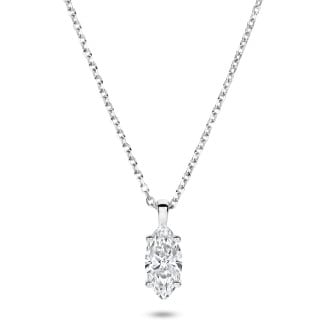
![1.00 carat solitaire marquise cut diamond pendant in white gold]() 1.00 carat solitaire marquise cut diamond pendant in white goldFrom € 1.754,50 (incl. 21% VAT)
1.00 carat solitaire marquise cut diamond pendant in white goldFrom € 1.754,50 (incl. 21% VAT) -
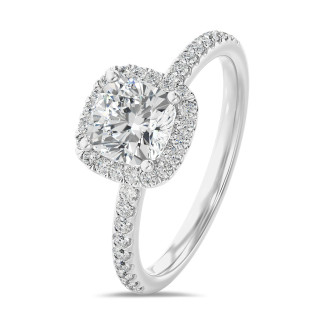
![1.00 carat solitaire halo ring with a cushion diamond in white gold with round diamonds]() 1.00 carat solitaire halo ring with a cushion diamond in white gold with round diamondsFrom € 3.037,10 (incl. 21% VAT)
1.00 carat solitaire halo ring with a cushion diamond in white gold with round diamondsFrom € 3.037,10 (incl. 21% VAT) -
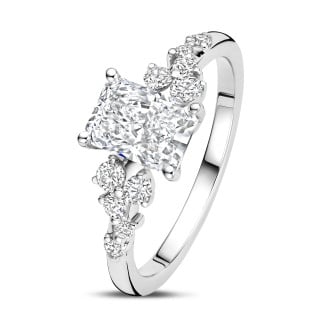
![1.00 carat solitaire cluster ring in white gold with a radiant cut diamond]() 1.00 carat solitaire cluster ring in white gold with a radiant cut diamondFrom € 2.383,70 (incl. 21% VAT)
1.00 carat solitaire cluster ring in white gold with a radiant cut diamondFrom € 2.383,70 (incl. 21% VAT)
.
What is an HPHT lab grown diamond?
But are HPHT diamonds real? Yes, HPHT diamonds are authentic because their chemical, physical, and optical properties are virtually identical to those of natural diamonds.
They’re available in two forms:
- Lab grown HPHT diamonds: these are entirely synthetic and expertly crafted from scratch in a lab.
- HPHT-treated natural diamonds: these natural diamonds are refined using HPHT techniques to enhance their properties, such as colour and clarity.
HPHT creation: the what and how
How are HPHT diamonds made?
This creation process is truly a feat of engineering. It involves three key phases that recreate the conditions found deep within the Earth.Phase 1: It starts with a diamond seed
It all starts with a tiny fragment called a “diamond seed.” This is the foundational core for a new diamond. Usually made of pure carbon or an existing small diamond, this seed is placed inside a growth chamber.Phase 2: Extreme heat and pressure
The chamber is subjected to staggering pressures of approximately 725,000 pounds per square inch and heated to temperatures as high as 1,500 degrees Celsius. This environment mirrors the natural forces that birth diamonds tens of miles beneath the Earth’s surface.Phase 3: Pure carbon crystallisation
Under these extreme conditions, carbon atoms form layers over the seed, binding together to create a crystal lattice structure. After several weeks, a diamond emerges from this process, with the same atomic structure and glimmer as a natural diamond.
Benefits of HPHT diamonds
- Sustainability: lab grown HPHT diamonds significantly reduce the environmental impact.
- Quality and purity: HPHT diamonds often feature fewer inclusions because they are grown under controlled conditions.
- Affordable luxury: HPHT diamonds offer the same brilliance as natural diamonds for a lower price.
HPHT diamonds compared to natural diamonds
Are HPHT diamonds real, and are they natural?
Yes, they are real, but not naturally occurring. HPHT diamonds are created in a laboratory under identical conditions. Just like natural diamonds, HPHT diamonds are 100% crystallised carbon, graded on the same 4Cs: cut, colour, clarity, and carat.
Feature | HPHT Lab Grown Diamond | Natural Diamond |
Origin | Lab-based, above ground | Formed in Earth over billions of years |
Visual qualities | Indistinguishable to the eye | Indistinguishable to the eye |
Certification | GIA, IGI, AGS | GIA, IGI, AGS |
Price | ~20–40% more affordable | Higher due to rarity and mining process |
While natural diamonds hold historic and geological significance, HPHT diamonds offer a modern alternative rooted in sustainability and transparency.
HPHT vs CVD Diamonds
Firstly, while HPHT diamonds simulate the Earth’s pressure and temperature, CVD diamonds are formed by depositing carbon atoms in a reactor chamber. Thus, the process is different. Secondly, HPHT diamonds naturally lean toward yellows and blues, whereas CVD diamonds tend to be colourless. And thirdly, there are structural differences between the two: HPHT diamonds typically have a more compact structure due to the high pressures used in their processing.
Both remain exceptional choices for those seeking ethically sourced diamonds.
Do HPHT diamonds come with a GIA certificate?
Rest assured: they are certified just like natural diamonds.. Certificates include details about the diamond’s cut, colour, clarity, and carat weight, alongside verification of whether the diamond is lab-grown or natural.
The involvement of institutes such as GIA ensures that buyers can trust the quality and authenticity of their chosen diamonds.
Why HPHT diamonds are a brilliant choice
Whether you’re considering HPHT diamond engagement rings, exploring the differences in the CVD diamond vs HPHT diamond debate, or seeking out diamonds with GIA certification, one thing is certain. HPHT diamonds are changing how we define brilliance and beauty.
Explore the world of radiant diamonds with authenticity, sustainability, and sophistication in your hands.

-
Fabienne Rauw
- Valquère Antwerp
- My Linkedin profile - Contact me