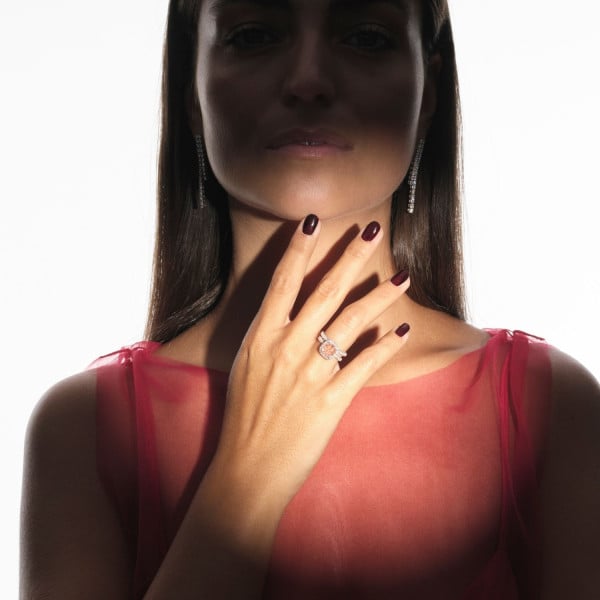








As the sands of time shift, an astonishing innovation has emerged within the jewellery industry that complements the allure of natural diamonds. Combining science, creativity and craftsmanship, lab grown diamonds, or LGDs, have introduced a new chapter in the world of fine jewellery.
But who invented lab grown diamonds? Behind every brilliant stone lies a fascinating story of scientific pursuit and a desire to craft perfection. In this article, we trace the origins of LGDs, from early laboratory experiments to their prominent and rising place in today’s luxury market.
Read summary
How Did Lab-Grown Diamonds Transform from Scientific Experiment to Luxury Jewelry?
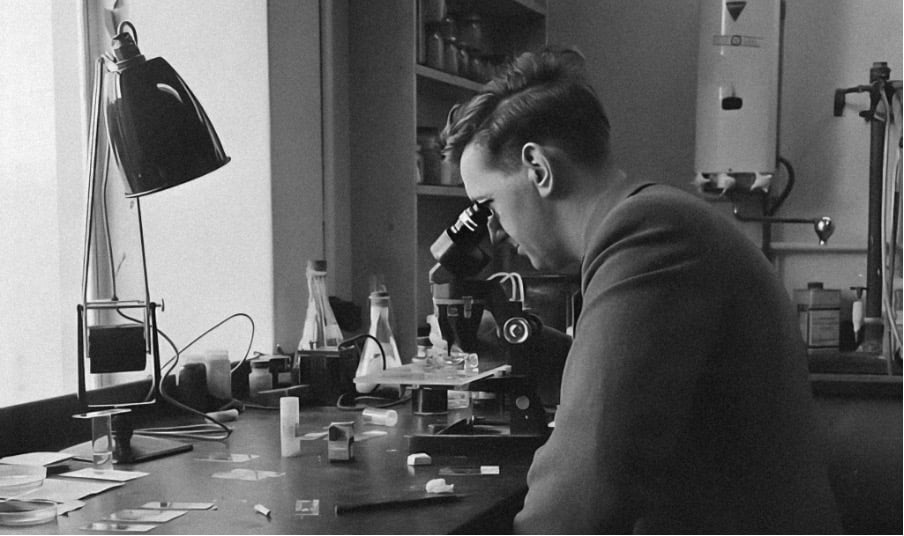
The journey of lab-grown diamonds began in 1954 when scientist Tracy Hall at General Electric created the first synthetic diamond using the High-Pressure High-Temperature (HPHT) process. These initial diamonds served industrial purposes rather than decorative ones.
The game-changer came with the Chemical Vapor Deposition (CVD) process, which enabled growing larger, clearer diamonds suitable for jewelry. By the early 2000s, lab-grown diamonds entered the commercial market, gaining popularity for their innovation, sustainability, and transparency.
Today, these diamonds grace haute couture collections and engagement rings, appealing to conscious consumers seeking ethical luxury. Their story represents the perfect marriage of scientific ingenuity and artistic craftsmanship, complementing rather than replacing natural diamonds in the modern jewelry landscape.
5 Questions to Find Her Perfect Engagement Ring
Are you planning to propose? Finding the right engagement ring is a defining step. Every ring is handcrafted in Antwerp from the finest materials by skilled artisans. Discover what engagement ring fits her personality.
Most viewed diamond jewels
-
![3.50 carat tennis bracelet in white gold with diamonds]() 3.50 carat tennis bracelet in white gold with diamondsFrom € 2.202,20 (incl. 21% VAT)
3.50 carat tennis bracelet in white gold with diamondsFrom € 2.202,20 (incl. 21% VAT) -
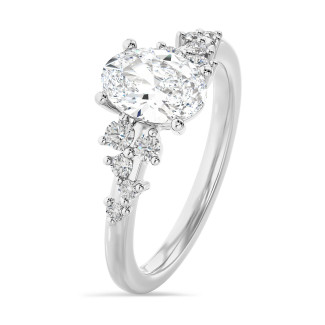
![1.00 carat solitaire cluster ring in white gold with oval diamond]() 1.00 carat solitaire cluster ring in white gold with oval diamondFrom € 2.444,20 (incl. 21% VAT)
1.00 carat solitaire cluster ring in white gold with oval diamondFrom € 2.444,20 (incl. 21% VAT) -
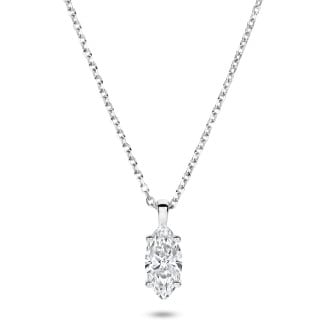
![1.00 carat solitaire marquise cut diamond pendant in white gold]() 1.00 carat solitaire marquise cut diamond pendant in white goldFrom € 1.754,50 (incl. 21% VAT)
1.00 carat solitaire marquise cut diamond pendant in white goldFrom € 1.754,50 (incl. 21% VAT) -
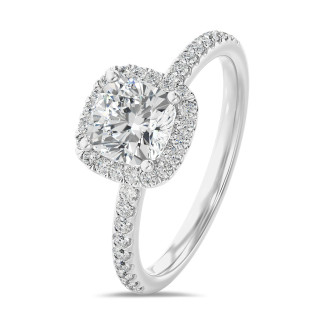
![1.00 carat solitaire halo ring with a cushion diamond in white gold with round diamonds]() 1.00 carat solitaire halo ring with a cushion diamond in white gold with round diamondsFrom € 3.037,10 (incl. 21% VAT)
1.00 carat solitaire halo ring with a cushion diamond in white gold with round diamondsFrom € 3.037,10 (incl. 21% VAT) -
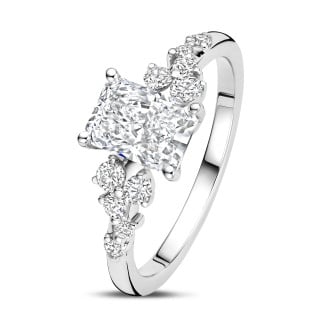
![1.00 carat solitaire cluster ring in white gold with a radiant cut diamond]() 1.00 carat solitaire cluster ring in white gold with a radiant cut diamondFrom € 2.383,70 (incl. 21% VAT)
1.00 carat solitaire cluster ring in white gold with a radiant cut diamondFrom € 2.383,70 (incl. 21% VAT)
.
The birth of a visionary idea
While these first synthetic diamonds were tiny and rugged, and unlikely destined for jewellery cases, they proved that science could mirror the awe-inspiring formation of natural diamonds. Hall’s achievement etched his name into history as a pioneer of LGDs.
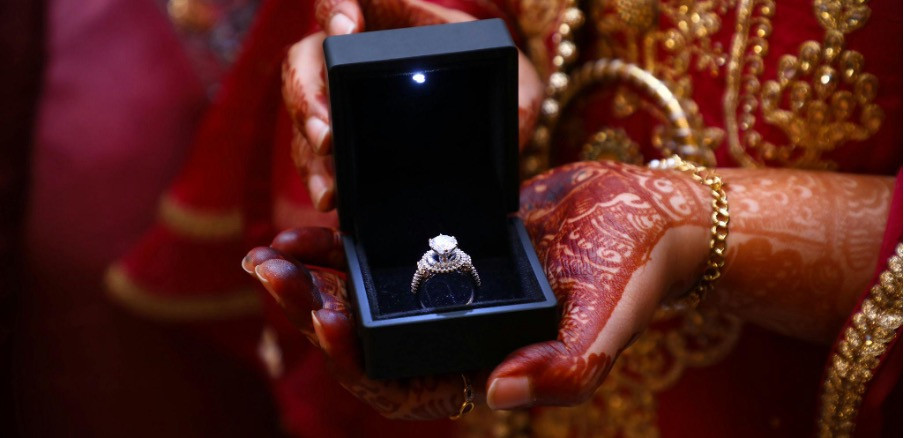
From functional to fabulous
The introduction of the Chemical Vapor Deposition (CVD) process decades later was a game changer in the industry. Unlike HPHT, CVD enabled scientists to grow high-purity diamond crystals in a vacuum chamber with precise control over clarity and size. They were larger, clearer, and purer, making them suitable for jewellery.
By the early 2000s, lab grown diamonds began to sparkle in showcases, bridging the gap between scientific mastery and artisanal craftsmanship. Their visual beauty now matched their natural counterparts, and their unique origins added a new dimension to the diamond story.
The commercial rise of lab grown diamonds
Countries like the United States, China and India emerged as key players in LGD production, leveraging advanced technology and streamlined processes to meet demand. What began as a scientific experiment had evolved into a thriving industry. One that is reliable, innovative and sustainable in the broader diamond narrative.
Today, LGDs are gracing the designs of haute couture collections and bespoke engagement rings. Their appeal lies not only in their dazzling quality but also in the peace of mind they provide to a new generation of consumers.
The ethics and elegance of lab grown diamonds
Importantly, their growing popularity doesn’t replace the legacy of natural diamonds, but rather complements it, each offering its own story, heritage, and appeal. Both types of diamonds reflect beauty and craftsmanship, whether formed deep within the Earth or nurtured in a laboratory.
A legacy built on brilliance
Each lab grown diamond carries with it a story of precision and innovation. They are not only a tribute to the wonders of nature and science but also to the diverse expression of love, artistry, and identity that diamonds represent today.
If the brilliance of lab grown diamonds speaks to you, explore Valquère’s latest designs and discover jewellery piecesthat reflect not just beauty, but also a new way to celebrate it.

-
Fabienne Rauw
- Valquère Antwerp
- My Linkedin profile - Contact me